Migrating south for the winter

20111216-170207.jpg

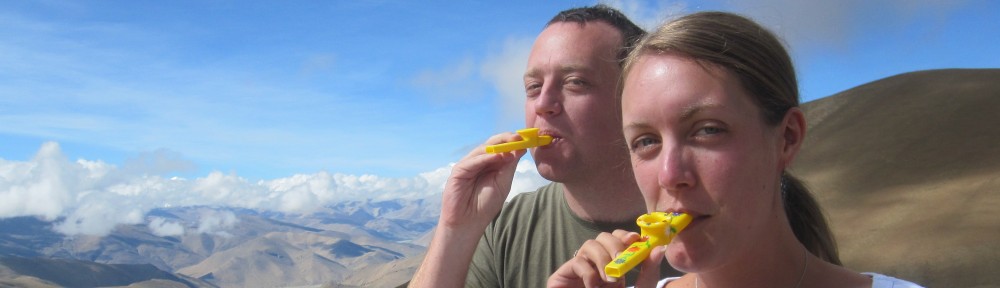
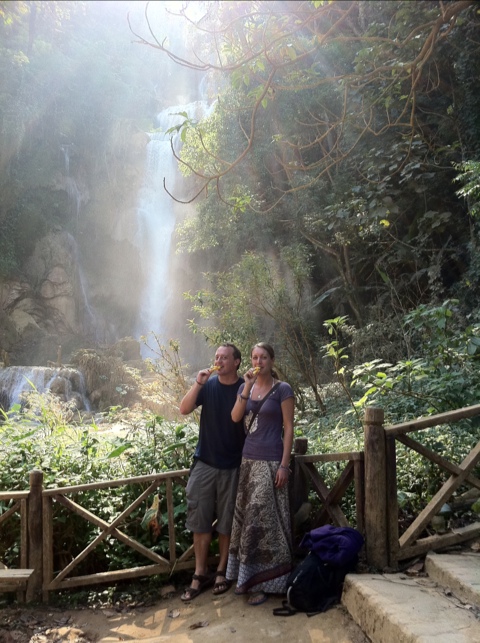
Kazoos at the Tat Kuang Si waterfalls

I’m writing this while in the bus station in Pakse, a dirty, dusty enclosure on the outskirts of town. We’re sitting on our bags on the grey concrete having arrived soon after dawn from Vientiane, now waiting for our onward transport to Si Phan Don, three hours away. The ground around us is spotted with oil marks from the passing vehicles, and there’s litter strewn across the dust; the sleeper bus that brought us here just departed on the return journey, but before it did, the driver kindly tipped out a basket of ticket stubs onto the mud, which have added to the mess. Around us, rickshaws come and go, as do motorcycles with sidecars (a new one for us), and the odd sparkling new car, all Ford Kias for some reason. The stalls around the perimeter are opening up for breakfast; the one next to us is serving steaming noodle soup, and there’s someone barbecuing meat in the distance. You can feel the day’s just getting started, following a familiar routine – the ice man comes round with a flatbed loaded with bags of frozen slush, shovelling them out into buckets for the stalls; a poor mother and her two sons wheel through their cart laden high with woven bamboo baskets each full of plastic to be recycled for a pittance; and a loudspeaker in the distance make some echoing propaganda claim about a candidate in the upcoming election before the music picks up again and relative laziness of Lao resumes.

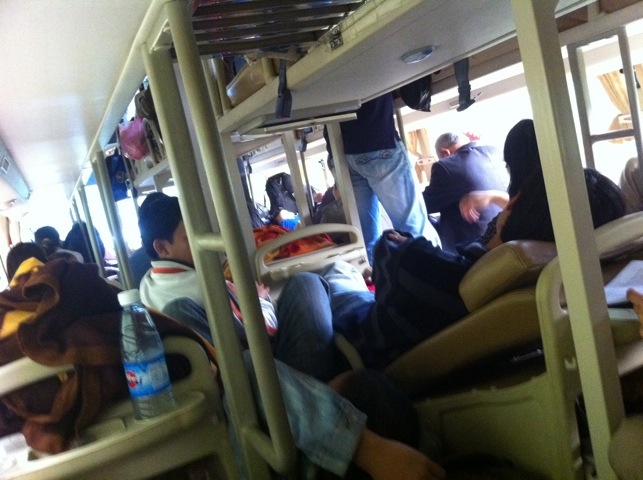
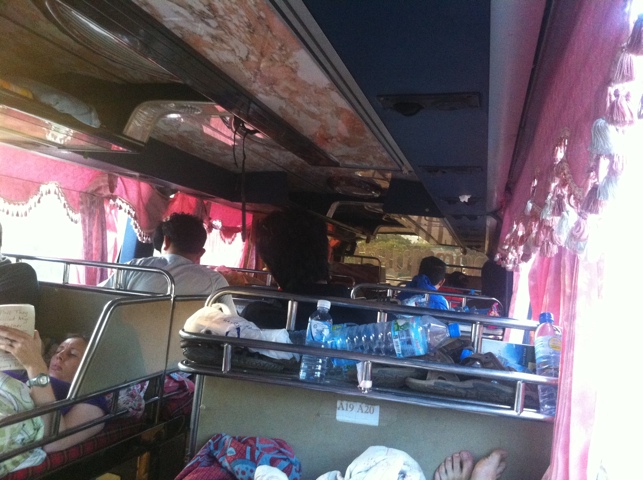
The bus last night was probably our craziest so far, its interior a sixties throwback of brown faux marble, studded multicoloured gemstone lights, and windows with a pink tassel fringe. It was certainly cosy too, with what were effectively small double bunk beds each side of the aisle, Laura and I having just one to share. The suspension didn’t exactly make it an easy ride, but we both appreciated having a fully flat bed, even if seatbelts and more room to move would have been a bonus!
20111216-170846.jpg

Our bus out of the 60s


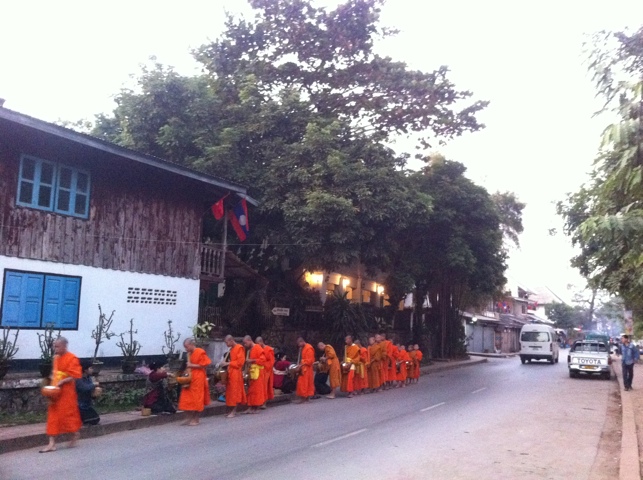
After Nong Khiaw, we stopped for a couple of days fun in the cultural playground that is Luang Prabang. Quietly pottering between Wats and then soaking up the sunset is a great way to spend time. Each morning at dawn, monks pour out of their monasteries and down the streets for ‘alms giving’, an age-old tradition where locals line up to give each monk a small food offering, them making a religious contribution and the monks demonstrating that they are leading a devout life without possessions. The monks collect the alms in metal pots, eating the food when they return to the monastry. There are a lot of monasteries in town and so this is a big daily event, with the streets full of monks draped in bright orange, processing in groups down prearranged routes. However, I don’t think we’d quite prepared ourselves for what a tourist spectacle it has become, with the opportunity for a photo opportunity very much overriding the religious devotion. Our guidebook provides a stern warning not to participate unless you’re actually Buddhist, and then to be very respectful in what you do. Sadly this didn’t seem to have got through to a lot of tourists, many of whom had plenty of flesh showing and were buying cheap rice from the roadside stalls before queuing up to be photographed making a show offering. We’d read that in the past monks have protested against this pollution of their religious ceremony, but that the authorities had instructed them to continue as it’s an important tourist draw to the town, threatening that otherwise they’d be replaced with a false procession just for show. Who knows how true that is, but this is certainly the bad sort of tourism!
20111216-170004.jpg

Monks receiving dawn alms in Luang Prabang


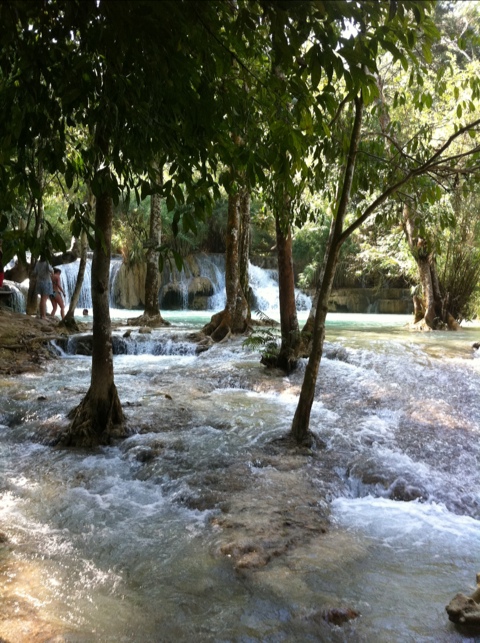
We also took a trip to the Tat Kuang Si falls, a truely tropical set of cascades and shimmering turquoise plunge pools. The beautiful sunshine re-emerged, and it felt like a glorious summer’s day back home, with the ice cold water refreshing if slightly shocking when we both went for a quick swim. The water was a brilliant shade of blue, and we had a peaceful ten minutes soaking up the atmosphere, and floating near the small rapids. The falls were home to crowds of picnicking locals as well as tourists and it felt like we were back in a National Trust park, although with one exotic addition – bears! There’s a bear sanctuary at the park in an effort to protect the local furry population from poachers. They had lovely outdoor enclosures and we watched from the viewing platform as a huge bear stood on his back feet and turned a drum with his front feet to extract food.
20111216-170544.jpg

We swam in the pool at the back


We stopped at a Hmomg minority village on the way back, a ‘village experience’ so customised for tourists that a well made concrete path led us on a route through the bamboo houses, lined on both sides with stalls staffed by local children selling handmade craft goods. Although we didn’t buy anything, we did spend a great 10 minutes afterwards playing with the kids, Laura spinning round with the girls clinging on to her arms, and me trying my hand (or more correctly, my feet) at Kataw, a hackie-sack keepie-upie game using a woven rattan ball which is as hard as it is hollow. Needless to say, my young instructor was a lot better than me, but I think they appreciated our enthusiasm!
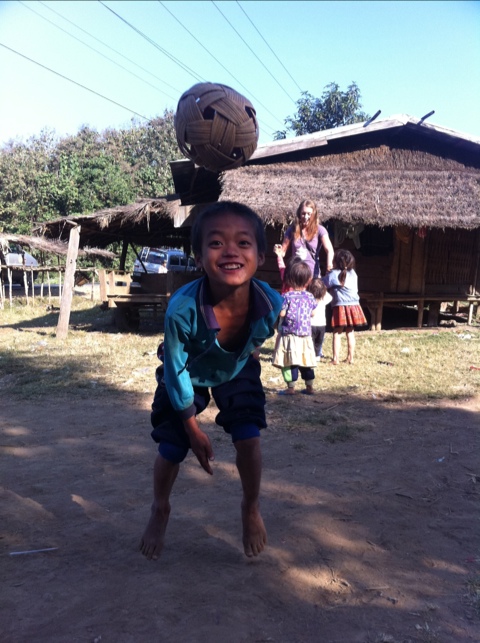
20111216-170359.jpg

Playing with the village kids. The ball is made of woven rattan


Having learnt the key moves, we thought it would be time to see how it’s done properly. Luang Prabang is currently hosting the Laos National Games, a four-yearly competition in 25 different sports. We popped our heads into the Kataw venue and saw a couple of frantic matches, played a little like volleyball, but where only the feet and head can be used. Most spectacularly there’s a move involving the front player (it’s two-a-side) doing a forward somersault during which they kick the ball downwards on the other side of the net. I still need to do a little more practice before I master that one!
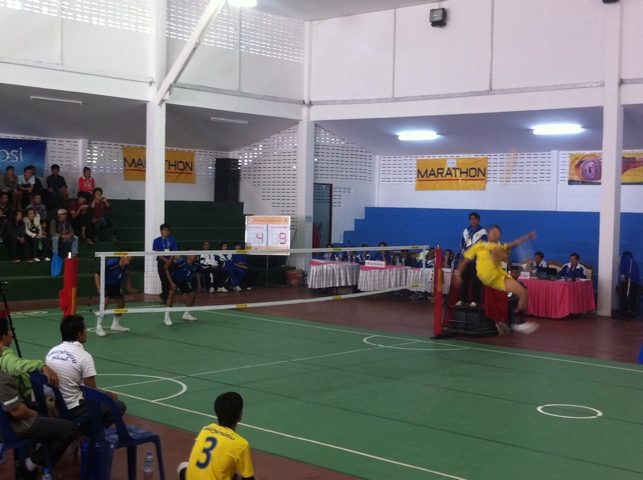
20111216-170733.jpg

The real thing - Kataw in action


We spent our final day hiring a couple of bikes and cycling around some of the sights further out. A real highlight was a visit to the weaving centre at OckPopTok, where they have a demonstration on how the complex patterns are made and what natural dyes are used. Unfortunately most of the weavers were out while we were there, so it was a bit of guesswork; reading up on how it’s done via Wikipedia is now on our to-do list!

As we left town for Vientiane, fireworks were filling the sky, marking the opening ceremony for the Laos Games. It was an impressive display, all the more so for us as when it finished with deafening screamers and a huge finale of rockets we were in a rickshaw about 50m away from the ridge they were being launched from! Only seven months until the Olympics and London will be doing the same thing – although I’m guessing Kataw hasn’t made it the list of sports quite yet.

Simon
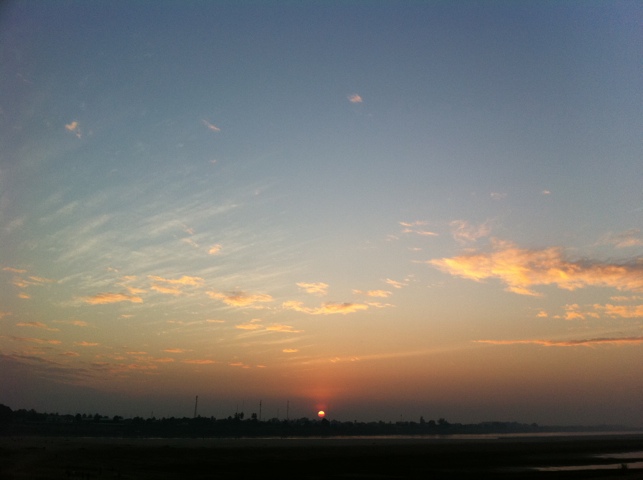
20111216-170858.jpg

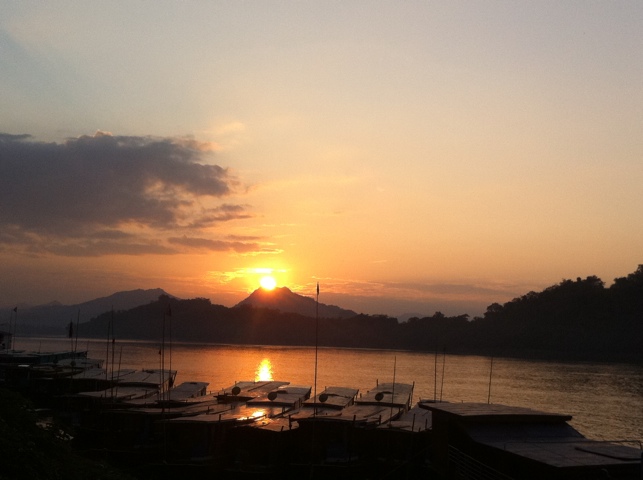
A final sunset over Vientiane
The scorpion and the bamboo hut

20111214-091939.jpg

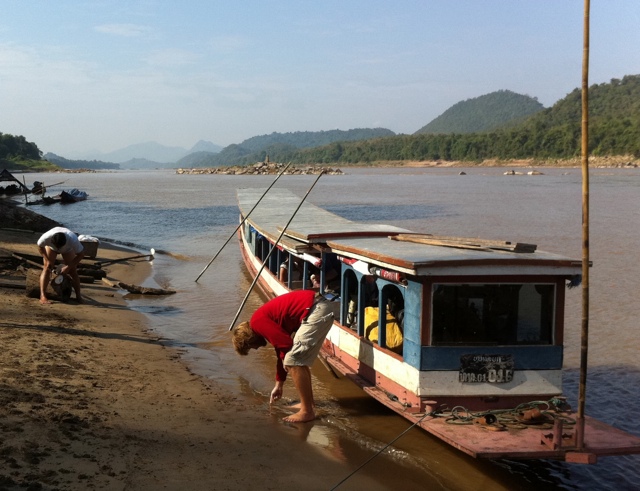
Our boat for the journey up to Nong Khiaw. You can see the captain/mechanic trying to fix the propellor on the left.


Eager to discover how Laos could possibly get any more sleepy than we’d found in Luang Prabang and Vientiane, we decided to take a break from it all and head upriver to the remote town of Muang Ngoi Neua.

We’d been promised a memorable six hour journey to the intermediate town of Nong Khiaw, and it was certainly epic – in all senses of the word. The boat was shaped like a javelin, a craft about two metres wide and 15 long, with two rows of child-size wooden seats down each side and a dozen of us on board. And just like its javelin equivalent, it had no cushions. Six hours is a long time to be sitting on a tiny wooden stool with your knees pressed against your chest. It’s particularly long when it turns out the journey actually takes ten hours, travelling all morning, all afternoon, and arriving in the dark!

Even if somewhat of a test of our endurance, the journey was stunning. As we headed upstream along the Mekong and then the Nam Ou rivers, we passed villagers with fishermen out on their narrow canoe-like boats, and towering karst limestone cliffs, which dominate the landscape. I’ve never really travelled a long way on a river before, but it’s interesting to see how much the surface changes as you travel along, from calm quiet waters one second to choppy rapids the next, presumably as the depth decreases, causing the water to run much faster. Although it’s dry season, we were surprised at the speed of the river, with the upstream journey at times an alarming struggle for our small boat. On a couple of occasions the river had narrowed and with the engine going at full throttle we were only just able to keep going forward, us shouting words of encouragement as the pilot tried to find the right line between the slower running water at the edge and not running us aground or into the overhanging greenery.

We’d initially been hoping to make our onward journey the same day, but it became apparent that was not to be, as we soon had to stop for repairs to a broken propellor. After an hour of our captain turning mechanic and running around in just his underpants to everyone’s amusement, we set off again, with the delay meaning we were still going as the sun set and it got dark. Given the boat lacked lights, this was a bit more of a challenge, but we finally made it with the moon to guide us, in spite of the well-meaning attempts of an American woman who got her torch out and proceeded to accidentally shine it in the captain’s eyes, eliminating any night sight he’d picked up. We later found out that some delay befalls the boat every day – everyone we’d spoken to had a journey of at least 10 hours, so they’re quite used to it, although we’re not entirely sure why they don’t have a spare light just in case!

20111214-091657.jpg

The scorpion in the sink. The plug hole was huge, honest!


After a stopover in Nong Khiaw, we took a quick (well, 90 mins was quick compared to the previous day!) boat journey to the village of Muang Ngoi Neua. It’s brilliantly remote, with no mains electricity or roads, so you have to get there on water. Although not free of tourists – the one street is lined with guest houses – it was a great place to chill out and practice our hammock skills in idyllic rural surroundings. Most of the places are pretty rustic – small stilt bungalows with weaved bamboo walls and floorboards on the floor. On our first night, we found the place we were staying a little too rustic for our liking; we woke to find a small scorpion in the sink. We thought the thing was dead, an assumption that Laura to her horror discovered to be false while in the bathroom – with the door locked from the outside! Yes, I was the the one that locked that door (although with Laura’s agreement), and yes I did feel pretty bad about it! As we were scrabbling to set Dr Butler free from her scorpion prison, i suddenly remembered a less-than-helpful ‘fact’ I’d picked up from a recent Indiana Jones film – it’s the little scorpions that are the most deadly! Fortunately, it didn’t get her. Panic over, we quickly relocated to somewhere nicer on the riverfront, and we were a little more careful about wandering around barefoot after that!

20111214-091716.jpg

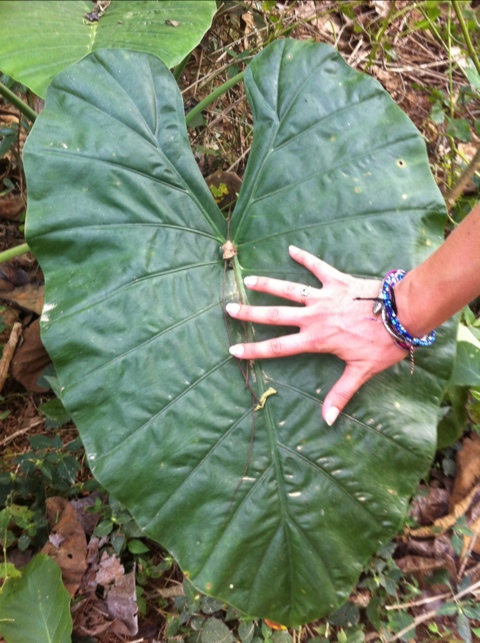
Huge leaves, or tiny hands?

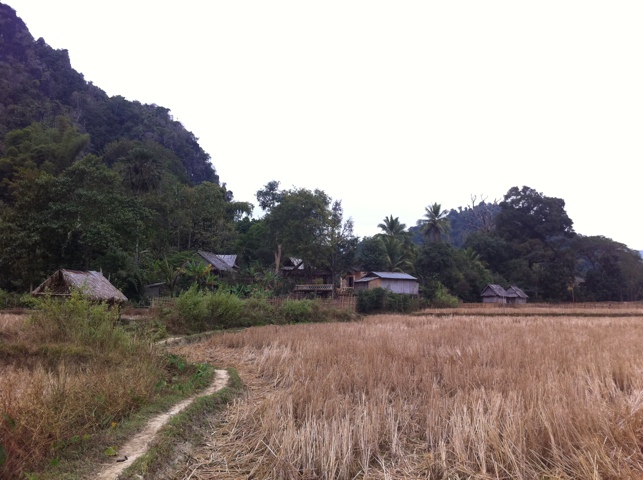
One day we went trekking to see some nearby villages. The trip took us through forests of green bamboo and lines of mysterious tall trees. You could for a moment believe this was a land of giants, with the greenery soaring to the sky above, and humongous leaves carpeting the floor below. Perhaps this is where those huge Buddha footprints came from? We plodded on through valleys of dry rice paddies, their wispy yellow stalks wavering in the wind like wheat, creating a beautiful picture against the sky and green mountains.

20111214-092723.jpg

The village and rice paddies

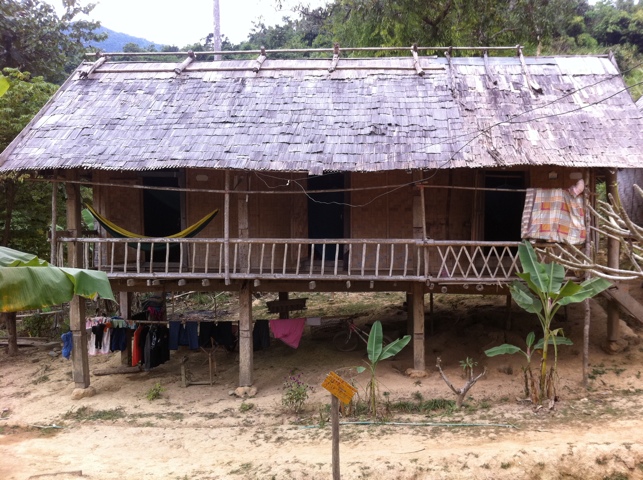
The village we stopped in for lunch comprised entirely of bamboo stilt houses – in a design we’ve seen elsewhere in Laos, each wooden stilt of the house rests on a large boulder for foundations, making it look like the whole place could be shifted horizontally with a shove. We didn’t try!

20111214-092248.jpg

A stilt house in the village. Note the boulders under the stilts.

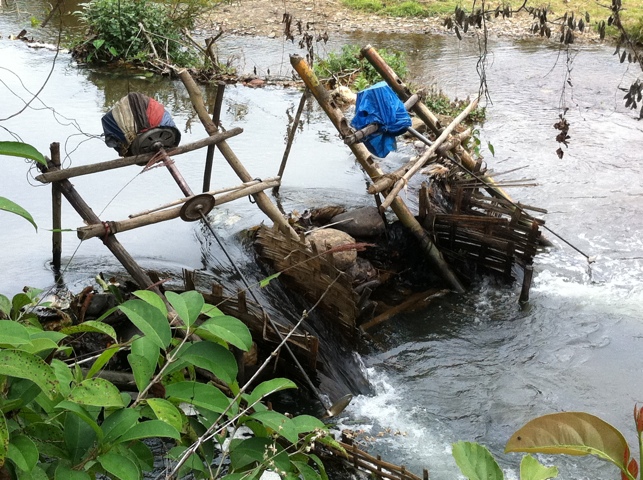
Since there’s no electricity supply, people who need it rely either on diesel generators for a few hours a day (which is how they light the town we were staying in), or they use little dynamos suspended in the river nearby. We wandered across the paddies to take a look, following the telltale sign of the rustic-style electricity pylons, not great grey monstrosities, but instead sticks of bamboo with a bit of black bell wire running between them. Simple but effective!

20111214-092235.jpg

Turbines in the water

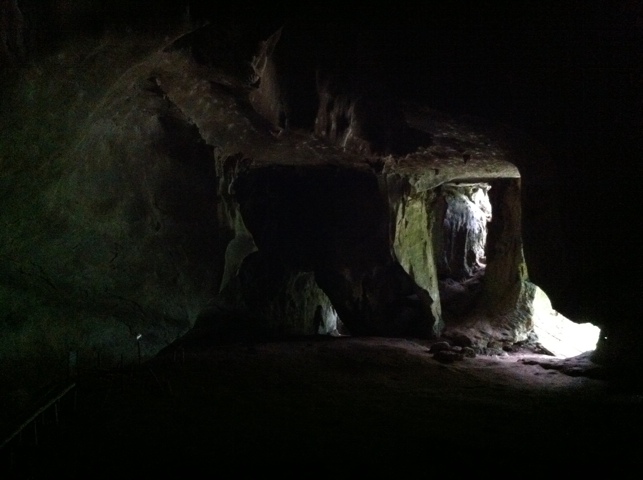
On the way back downstream, we stopped in Nong Khiaw to visit the local Than Pha Thok caves, home to the Luang Prabang provincial government during the war. Set high up and deep within the cliffs, the caves run for hundreds of metres, with areas for different sections of the administration. Next to the council chamber, there was a space labelled ‘Art Dept’; we had romantic visions of experts in oil and watercolour painting the scenes at war for posterity, until we realised that ‘art’ probably stood for ‘artillery’! Round the cliff, the two 10 year old guides we’d adopted took us to a second much more narrow opening, essentially a long tunnel running far into the rock, with chambers coming off it. With only our torches to light the way, we crawled through, not wanting to look too closely for the eight-legged inhabitants that were probably also enjoying the cool and dry inside. The space was used by the regional bank during the conflict, and it wasn’t hard to see why – the single narrow twisting passageway would have made it easy to defend, and there was plenty of space inside. It was claustrophobic enough though, and I can imagine it must have been pretty hellish during the war with bombers striking the hillside outside making everything shake. At one point, crouched on a rocky ledge, we switched off both our torches to see how dark it was, and our 10 year old assistants soon told us the answer through their squeals – scarily dark!

20111214-092656.jpg

Tham Pha Thok caves, home to the provincial government during the war

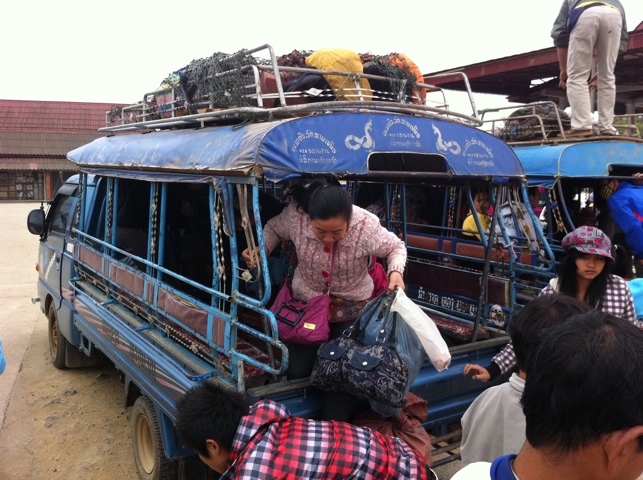
For the return journey to Luang Prabang we took the bus, a cramped three hour trip on a Sawngthaew. At one point, I counted 20 of us on the back, with 5 sacks of vegetables! With the wind rushing past us sitting on the open back of a pick-up and the lack of sun, we both actually felt cold for the first time in months. It reminded us that it is actually winter (I guess those back home might have noticed before now!), and time for us to head south to warmer climes for Christmas.

Simon

20111214-092542.jpg

Our transport home, a sawngthaew. There were 20 of us in there!

Legacies of the past

20111210-172720.jpg

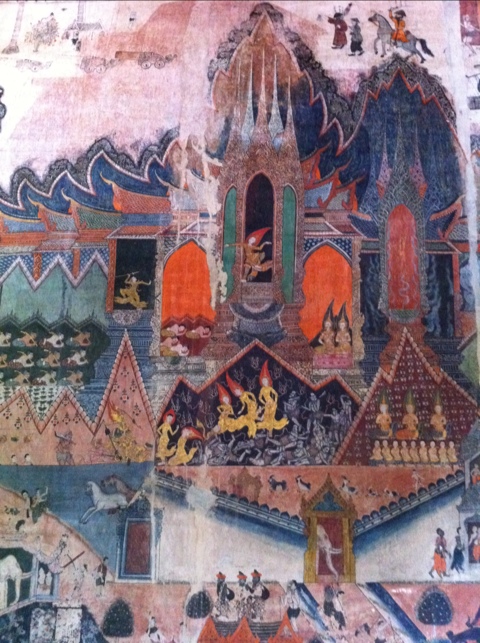
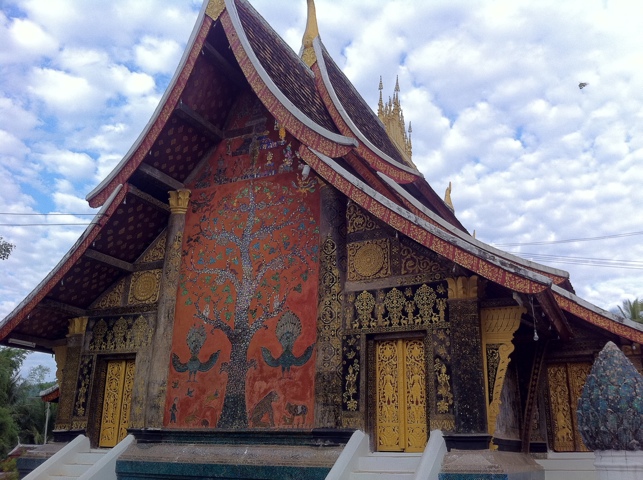
Tree of life on the wall at Wat Xieng Thong


We took the sleeper bus to the northern town of Luang Prabang. Our departure was fairly typical of the laid back approach here. We were told to be at the hostel at 6pm for a bus leaving the town’s northern bus station at 7. Being new around here, we got there early. An hour later, at quarter to seven, our transport to take us to the bus station finally arrived – a Sawngthaew, converted pickup truck with a basic roof and two benches screwed to the floor. We were beginning worry about missing the imminent bus, but then we remembered – Laos time. Chill out! Our pickup spent the next thirty minutes spiralling through the streets of the tourist part of town collecting various other folks for the ride, each looking more panic stricken as 7pm came and then went. Pretty much full, we were certain this must be it, and we’d soon be finally off. We lurched round the corner, only to find the engine switched off, and ourselves one street away from where we’d started two hours before. The driver announced that we were waiting for two more passengers who were running late, and so we sat and waited. 7:30 came and went, and then the guy, looking increasingly worried himself, had a debate with the manager of the hostel we were parked outside, who then also came to assure us we were waiting for good reason – comically he told us the passengers holding us up weren’t even on our bus, instead heading south to Si Phan Don (we were going north, but it was from the same out-of-town bus station). At 7:45 two people finally showed up (it seemed they’d just casually gone out for a long dinner), piled into the front, and off we went. After another ten minute stop on the way, we eventually arrived at the bus station, alarmed at whether we’d be forced to sit on the roof, or if the bus would even still be there. We raced from our transport to the bus, only to find it empty. A sign on the front said Lurang Prabang 8:30pm. It seemed our 6pm pickup had been a little eager! We learnt our lesson, and will not be early again!

During the night we trundled our way through the dark countryside, stopping for various toilet breaks at nameless shacks in equally anonymous towns. At one point I opened my bleary eyes to find we were in a place apparently from the eighties – and I wasn’t actually dreaming! Everywhere one looked, there were bright white fluorescent strip lights in a strange Lao homage to bad taste and punk. They hung from lamp posts and took the place of floodlights illuminating temples. Every now and again we’d go past a lit up house, where I thought normal lightbulbs had been restored – only for us to see through the next window the distinct long white shape of glowing neon and have the 80s reconfirmed. In my dreamlike state, I half imagined seeing things to accompany the mood lighting: huge coloured hairstyles; ghetto blasters and graffiti; and worst of all, Margaret Thatcher in a shellsuit. Fortunately we woke up to find ourselves at dawn in Luang Prabang and not stuck in a nightmare of three decades ago!

20111210-172859.jpg

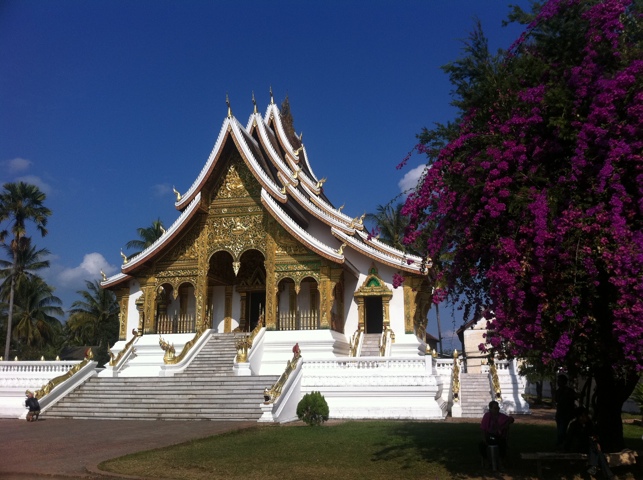
Wat Ho Pha Bang gleaming in gold

Another UNESCO world heritage site, Luang Prabang is famous for its historic mix of ageing French architecture and thirty temples, or Wats (the best being actually named ‘Wat That’). Like Vientiane, it sits on the banks of the Mekong – although without a huge flood plain in front, so the river runs right alongside the town, providing lots of spots for tranquil waterside eating and drinking. The climate in Laos has been overwhelmingly warm and sunny, hotter and more pleasant than Vietnam, without the repressive high humidity that we’ve experienced elsewhere. Above all, that means that the shade is a refreshingly cool sanctuary rather than more of the same sticky heat. We spent a good couple of days sampling the local culture – sights, food and of course drink – and soaking up the atmosphere.

20111210-172523.jpg

Mural in a Wat near the City Palace

Some of the Wats really are incredible, with shining brightly coloured detail both inside and out. A lot use coloured pieces of mirrored glass to great effect, the most memorable a tree of life on the outside wall of the town’s best known monastery, Wat Xieng Thong, and the seam of bright red and green between the golden pillars at the City Palace. Wat Ho Pha Bang, at the palace, has the most amazing room of gold – every single surface in this huge space has been painted with gold leaf creating a truly heavenly effect. Some interiors are also decorated with age-old (and largely unrestored) murals, but it’s the exteriors that really stuck – set against the bright blue sky, the colours across the city were a fabulous blend of dazzling golds and gleaming reds and greens.

20111210-172553.jpg

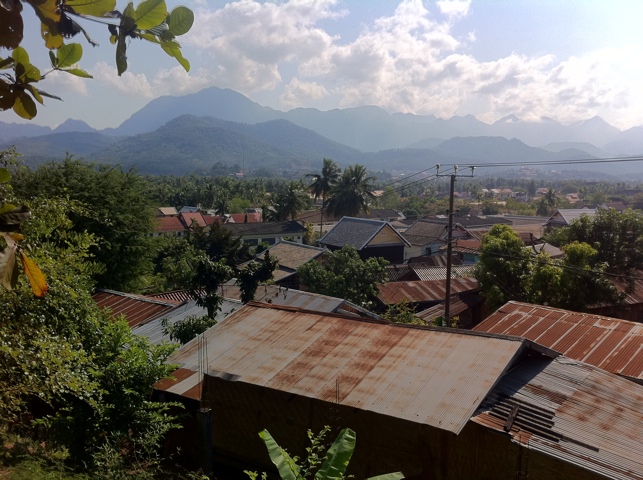
View from Phousi

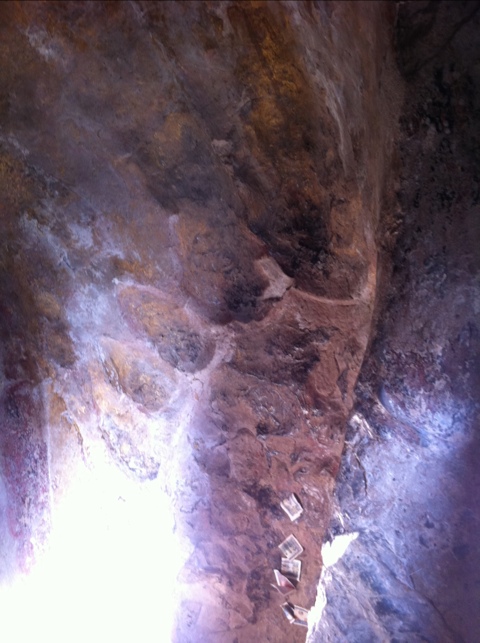
We climbed Phousi, the large hill in the middle of town, and from the temple at the top were treated to a vista over the surrounding area, as well as slightly incongruously, an acclaimed Buddha footprint. Having read about its existence somewhere on the hill, in true sacred relic fashion I began to see Buddhas’ footsteps everywhere. There was the strange dent in that limestone, which Laura was skeptical about, but I could definitely see something. Then came the impression in the cement, unquestionably a set of toe marks. Ok, maybe Buddhas marginally pre-date cement, but people have seen the Virgin Mary in their toast, right?! When we finally came to the footprint, a dinosaur-sized mark in the rock, we knew we’d come to the right place. Sign saying ‘Buddha Footprint’? Tick! Temple built over sacred relic to protect it from the weather? Certainly! Monk on standby nearby to smile and assist with donations? Must be it! Having succeeded in our quest, we retreated down the hill to soak up the sunset.

20111210-172638.jpg

The Budda footprint

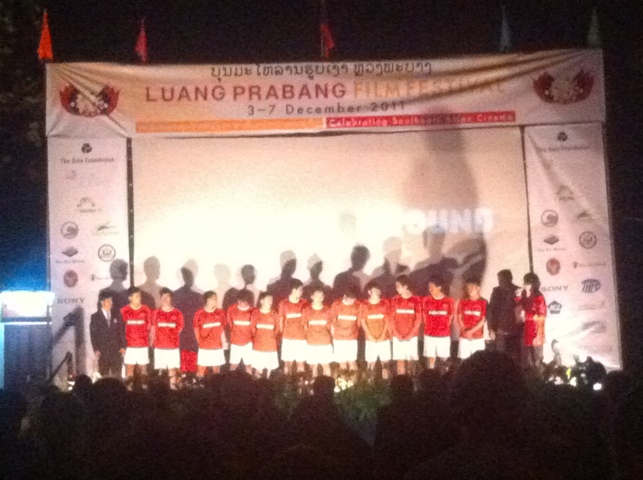
While we were in town, Luang Prabang played host to its acclaimed South East Asian Film Festival, with free open air screenings in the town square. Having had some of the local rice whisky, Lao Lao, to fire up our imagination, we settled in to watch a preview of ‘On Safer Ground’, a Swedish film about the first Laos youth football team coming to the international youth games in Stockholm last year. Although slightly shaky at first, we were impressed by it and ended up gripped, following the team through their successes and penalty shootouts. To complement the football, As a more serious theme it also attempts to educate the viewer about the problem of unexploded ordinance, which as I mentioned before is a big issue in Laos. The activism culminated in heralding the arrival of the 2008 convention banning cluster munitions, a genuinely landmark action with many signatories, including the UK. Poignantly for those across South East Asia affected by UXO, the treaty has however not been signed by the main culprit, the USA.

20111210-172336.jpg

The football stars of On Safer Ground


After the closing credits there was a special guest appearance from the football team in their bright red kit, to rapturous applause from the audience. The film festival then welcomed their special guest to the stage, who was an odd choice given the UXO theme and the country’s history. Especially here, we weren’t expecting to hear “We welcome the US Ambassador!” In fairness to the individual, he looked embarrassed, and just shook a few hands before disappearing quietly.

His appearance made me think of
both how far Laos and the US have come in repairing their relationship after the unthinkable atrocities of the sixties and seventies, but also how far the US still has to go – not just on the issue of clearing up what it left behind, but also in there being real words of action for the Ambassador to be able to tell the crowd they were going to finally ban cluster bombs instead of embarrassed silence. We might think of these as grotesque legacies from the past, but the reality is that the source of the problem has still not been stemmed, with cluster bombs in use in very recent conflicts. The final 48 hours of the 2006 Israeli bombardment of Lebanon left more than 1,000,000 unexploded submunitions in the farmland and villages there according to the UN; the British used Cluster Bombs in Basra during the Iraqi Conflict in 2003; and the US used them extensively, including in Fullujah. In all three of these situations the objective was to reclaim the towns from militants so that civilians could return; in each they returned to a deadly harvest of explosives. Having spent much of our time hoping for the preservation of relics from the past, this is one legacy we do not want to be kept for the future.

Simon

20111210-174150.jpg

Sunset over the Mekong River

Listening to the rice grow

20111206-093434.jpg

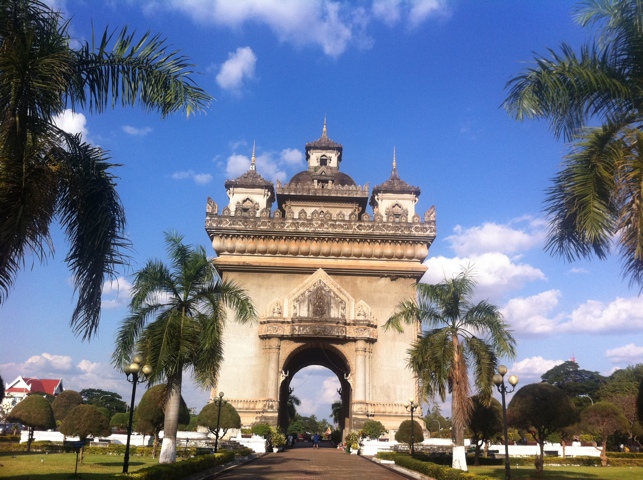
The Patuaxy, or Vertical Runway

Making our way into town on the back of a converted pickup truck after the journey from Hanoi, we could immediately tell we were going to love Laos. Vientiane is the capital city, but feels more like a sleepy village – the streets wonderfully quiet and absent of the chaos of motorbikes and honking horns we’ve come to accept elsewhere. There are pavements, giving it an air of sophistication, and no litter, which has plagued some of the places we’ve been. I could see Laura positively beaming as we passed various fountains on the way in to the centre – fountains which were actually filled with water and working, unlike most we’ve come across on our journey. The other immediately obvious thing are the temples, or wats, whose golden gleaming beauty and multi-headed serpents are unlike anything I’ve seen before. Being just over the border, I gather they’re quite Thai in style, very different to the Buddhist temples and stupas we saw in Tibet, even if their was some familiarity in seeing monks wandering around in their robes – now Guantanamo jumpsuit orange instead of the deep red of the Himalayan orders.

The speed dial here has been turned down to ‘laze’, echoing the Laos attitude that everything must have an element of fun to be worth doing, and reflecting the pace of life in a country that until the nineties apparently had no road connection to the world outside. Smiles are in abundance, and although certainly not naive about tourists (which are as common as those smiles), you don’t get the feeling people are after your money at every turn, which we’ve certainly had elsewhere. 60 kip (£5) for an en suite twin room at the Lao Youth Inn, an absolute bargain and our cheapest yet!

Escaping from the backpacker village that comprises some of the town centre, we went off seeking sights, and soon found ourselves with two very different snapshots of the national psyche.

20111206-093422.jpg

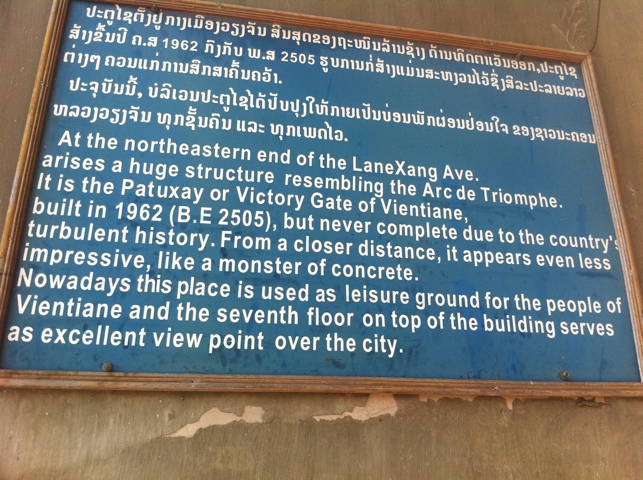
Sign at the Patuaxy

The Patuaxy, or ‘Arc de Triomphe’ sits in the middle of Vientiane’s central boulevard, a towering echo of the more famous Parisian monument. It’s huge, at seven stories high, and the views from the top formidable (once we’d passed through no less than four gift shops on the route). It’s also known as ‘The Vertical Runway’, as it was actually built using cement given by the American Aid programme in the sixties for the construction of a new runway at the airport! As we found out, Lao’s relationship with America became pretty loveless during this time, but this it was an interesting reminder of how aid can be diverted. The sign at the monument itself also has a touching imprint of Lao honesty and naivety about western notions of marketing. One hilarious sentence reads “From a closer distance, it appears even less impressive, like a monster of concrete”.

20111206-093452.jpg

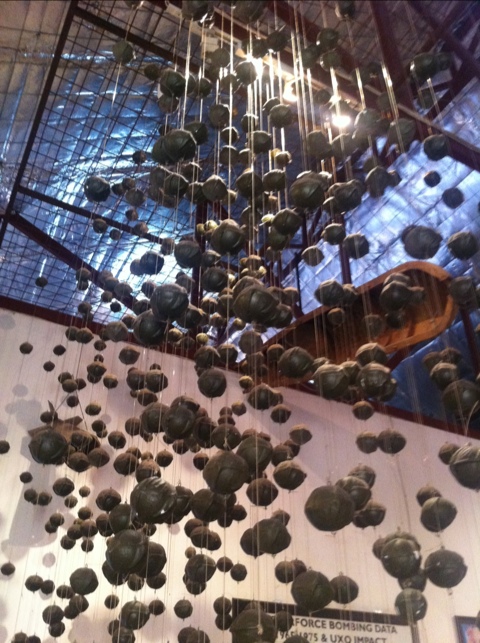
Cluster bombs at COPE

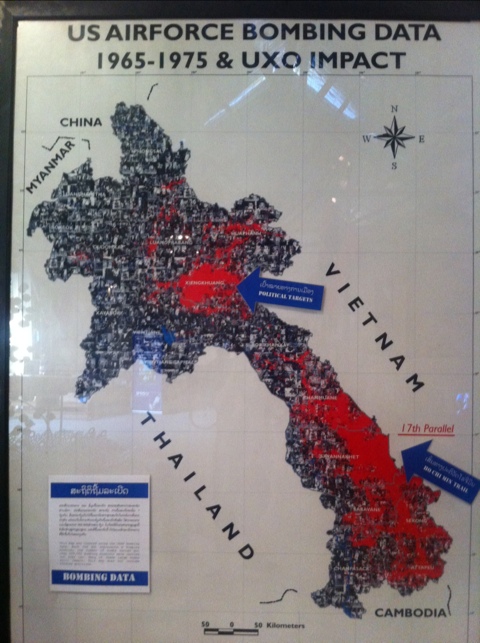
Our other snapshot of Laos life was decidedly more sombre, with a visit to the local NGO COPE, the Cooperative Orthotic and Prosthetic Enterprise, which works with those who have lost limbs. Going round their permanent exhibition, we learned about UXO, or UneXploded Ordinance – Lao has the grim title of being officially the most bombed country on the planet, with America’s ‘secret war’ in the country happening alongside the more public atrocities in Vietnam. A red dot in the picture below indicates each bombing sortie in a war that was being officially denied by the US – targeting the ‘Ho Chi Minh’ trail into Vietnam, as well as political targets in the ‘Plain of Jars’ in the north of the country. According to official US figures, 2,093,100 tons of ordinance were dropped over 580,944 sorties, equivalent to one B52 bomber every six minutes over the nine years of the war. Notwithstanding the civilian deaths from the campaign itself, 1/3 of the population became internal refugees, and the legacy of the cluster bombs dropped still kills one person in rural Laos daily. It’s believed that 30% of the submunitions didn’t go off, leaving millions of grenade-sized bombs scattered in the countryside. Tragically, in recent years the cost of scrap metal has risen, with many poverty-struck villagers and especially children now trying to make money harvesting the metal planted by war. Half of reported UXO accidents happen to those trying to salvage munitions. Despite the efforts of the UN and mine clearance organisations like MAG, at the present rate it will take another 200 years before Laos is clear of this horrific legacy from decades ago. And all this from a war that didn’t exist.

20111206-093511.jpg

Bombing in the war in Laos

20111206-093638.jpg

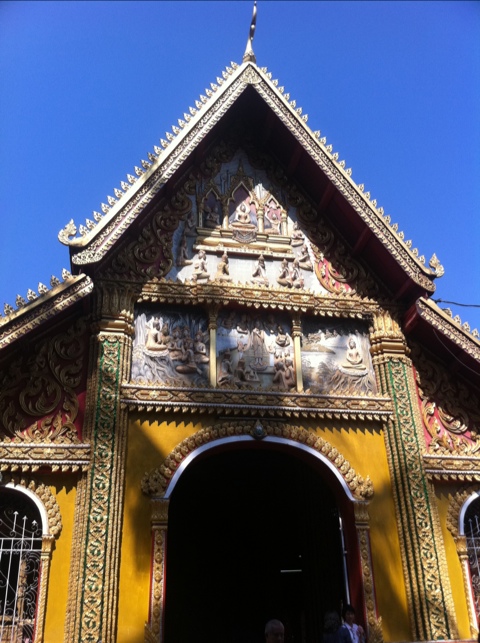
A Wat in Vientiane


Our final day in the capital was Lao National Day. In other places this might have been the time for parades, street parties and celebrations. In Laos, it apparently means it’s an even sleepier day than normal! Fortunately for us, it meant we had some time to see some more of the town’s
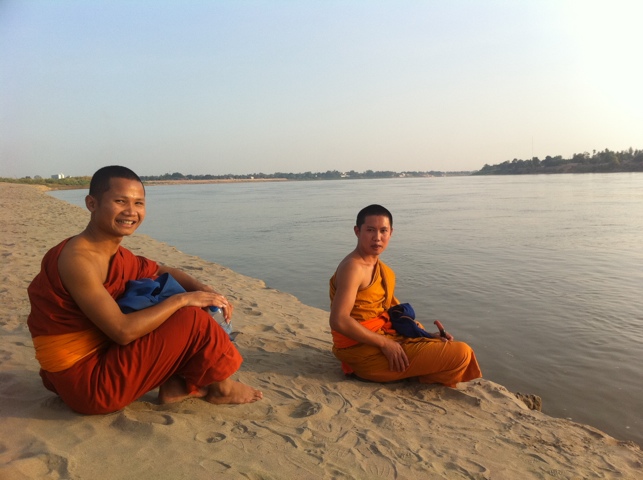
Wats, and then wander in the brilliant afternoon sunshine down to the Mekong river, where we met some monks strolling along the sandy bank. We had a lovely chat with them, inquisitive about our lives back home and what temples we worship in. We explained the ‘Christian Temples’ attended by some on Sundays – the concept of many being non-religious is always a tricky one – and also a little about our trip around Asia, particularly Tibet. Both aged 21, they were keen to practice their English and we had a great time – even if we weren’t able to get much out of them about their lives and whether their calm smiles of the street extend within the monastery walls.

Simon

20111206-093621.jpg

Our monk friends by the river

24 hours on the bus

20111201-211028.jpg

View from my seat on the bus

I’m writing from an epic bus journey, 24 hours from Hanoi, Vietnam to Vientiane, Laos. Laura and I have just had a tasty picnic lunch of baguettes filled with ham and actual cheese with flavour. My taste buds are still tingling from the sensation! Accompanied by stunning mountain panoramas and the great music of Electrelane, it’s gone a long way to break up the monotony of a long road trip.

The bus we’re on is a modern sleeper, with three lines of bunk beds running down its length, some flat screen TVs playing Vietnamese dubbed Kung Fu movies, and a lot of sweaty passengers in the near-flat seats, and also on the isles between them. We’ve seen this trip dubbed ‘The bus journey from hell’ online, but in reality it’s been pretty good, after a slightly shaky start.

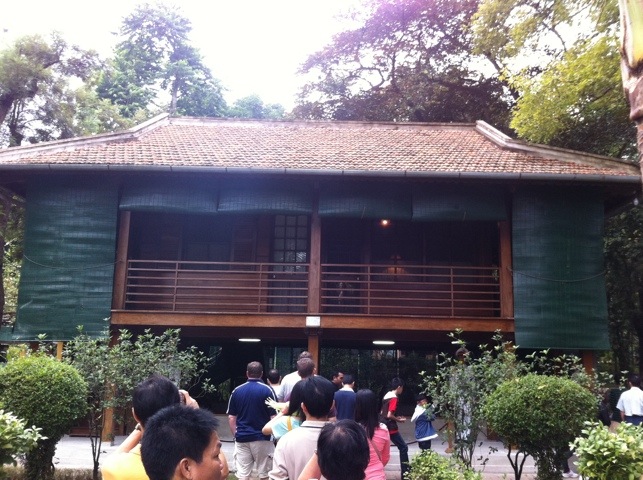
Our last day in Hanoi started with a quick visit to Ho Chi Minh’s Mausoleum and House. It’s a bit of a logistical struggle, and we’d failed to make it into the complex before going to Sa Pa. The complex is closed Mondays and Fridays, and of course on weekends. It’s also closed after 11am daily. And for all of September, October and November, when his body is sent for it’s annual re-embalming. It still being November, we were expecting to only see the house (which is apparently open afternoons, although how you actually get in since the complex is locked is another matter), but unexpectedly found ourselves in a line leading to the Mausoleum. I don’t think either of us had quite expected to round a corner, be shushed to silence by a guard, and find his body on display in the spotlights. This is probably the right time to say that as much as it was a surprise to us, it would also have come as a surprise to him, given his final wish was to be cremated, something not honoured by his successors. We also went round his ‘Stilt House’, a very modest two room dwelling where he was said to have lived, exemplifying himself as a man of the people with modest ways. This perspective does somewhat overlook a few facts though – for this place is still within the lavish grounds of the presidential palace, and Uncle Ho (as he’s endearingly known) also had another more conventially-sized house within the grounds – complete with a collection of cars. Strangely although on the tour, this isn’t the one featured on all the photos of his life though…

20111201-145851.jpg

Ho Chi Minh's Stilt House

We were picked up from our hotel by a minibus to take us and apparently 25 other tourists to the bus depot. Considering the minibus could seat 19, and we all had luggage a plenty, it was a bit of a squeeze! The obvious jokes about us being on the minibus all the way to Laos weren’t that appreciated by those standing in the isle, and we were pleased when rolled up at the city bus depot. Although not quite so manic on this sleeper bus, it’s still a squash for taller folks, with some bunks apparently built for dwarfs incongruously the place they were forced to sit by the driver’s shouting assistant. There’s a guy off to our right whose seat is so small that with his legs straightened out he was nearly sitting on the head rest! Fortunately our bunks are fine, even if the aforementioned shouting assistant has gone to sleep on the bit of corridor between us and occasionally elbows us as he stretches in his sleep.

20111201-211121.jpg

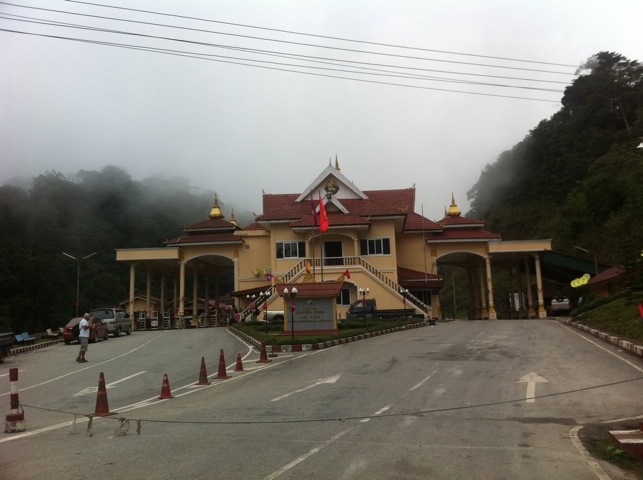
The border, Laos side

We’re now in Laos, having crossed the border when it first opened at 7am this morning. So narrow is the country that we’re already skirting its western border, and as I write this I can see over the river to our left to the trees in Thailand, where we’ll be setting foot sometime in the New Year. Our border crossing earlier was entertainment in its own right, with a jester amid the border guards on the Vietnamese side. They’d collected in all the foreign passports in
order to stamp us out (for a princely $1), and so had to return them. The guy called out each name, after which the corresponding person jumped to the front and did their best to look like their passport photo. Hats and sunglasses were removed, smiles were suppressed, and we tried to look as 2D as possible. It was more of a challenge for one girl who now had frizzy hair in contrast to her straight-haired photo; the guard even showed me her passport in jest as he refused to return it to her. Fortunately she had ID to vouch for herself, although at one moment it did seem he was going to seize that too! Laura and I managed to make it through unscathed – she actually looks quite like her photo, and it turns out that for me, the trick was to put on my best criminal pose, and then puff out my cheeks like a hamster – it would appear that I’ve lost weight since the snap was taken!

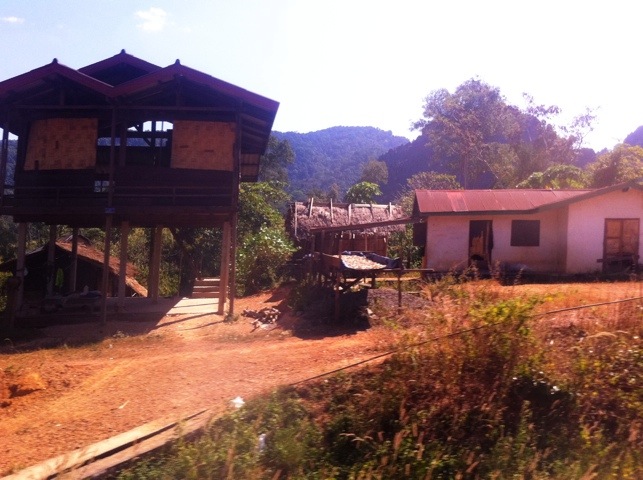
20111201-211012.jpg

A traditional stilt house we drove past in Laos


All in all, we found Vietnam a little hard to get stuck into after India. Some of the places we went to were fascinating, and some of the things we saw and learnt heart-wrencing, particularly around the war. Unfortunately these moments of shock and awe were interspersed with a bitter taste from having both a taxi driver and a hostel try to con us in Hanoi. Perhaps we’ve also travelled too fast and not stopped long enough to let the qualities of the locals and their way of life really settle; our few days in Hoi An, in Ha Long Bay, and in Sa Pa were each enchanting in their own way – but not quite enough to make the whole.

So with less than a month to go until Christmas, we find ourselves on a sleeper bus to sleepy Laos, where we hope to find a different pace with a relatively untouched way of life. As the French put it, “The Vietnamese plant rice, the Cambodians watch it grow, and the Lao listen to it grow”. We’ll let you know what it sounds like next time!

Simon